

Childhood & Complex Trauma
Childhood & Complex Trauma Therapy in Pasadena, Newport Beach, and Virtual CA

Break the shackles of childhood trauma & begin creating the life you want.
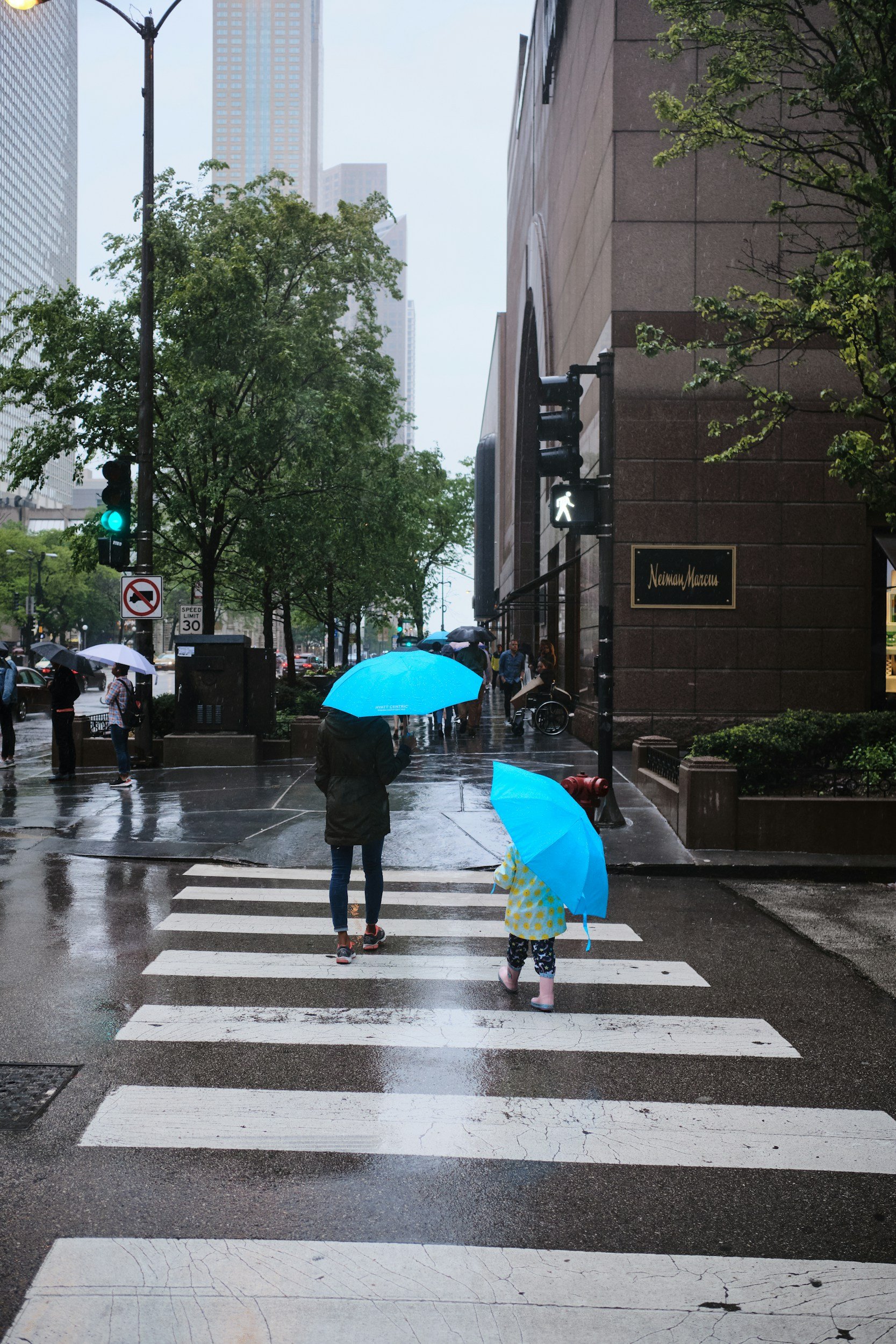
You Grew Up. The Wound Didn't.
What happened to you was real. The chaos, the unpredictability, the way you had to become more alert than any child should have to be. The moments you were not safe, were not held, were not seen. You grew past those years. Your body did not. Your nervous system still remembers. It still flinches at certain tones of voice, still organizes itself around avoiding what it once could not survive.
You may look, from the outside, like you have it together. Maybe you do. You built something despite what you came from. You learned to work harder than anyone around you. You became the person who does not fall apart, who handles it, who figures it out. And underneath all of that—underneath the accomplishment, the capability, the composure—something still does not feel right.
You get triggered in ways that embarrass you. You have patterns in your relationships that hurt, again and again. You work harder than anyone and still feel like you are never enough. You find yourself acting in ways that do not feel like you, or feeling emotions that seem to come from nowhere. You may not even connect these things to your childhood anymore. You may just think this is who you are.
It is not. This is what you learned to do to survive. And you do not have to do it anymore.
What You May Be Carrying

Childhood trauma does not end when you become an adult, or when you leave the house, or when everyone tells you that you should be over it by now. It lives in the body. You may be carrying a hypervigilance that never fully switches off, a nervous system that braces at a particular tone of voice or a certain kind of silence. You may second-guess your own perceptions long after the harm is over, hearing a critical voice in your head that is not entirely your own. You may feel shame for being affected at all, as though your pain proves something is wrong with you. It does not. It proves you are human, and that something difficult happened to you.
For many people, there is also a loss that is harder to name. A sense that you do not quite know who you are anymore. The childhood you came from asked you to become smaller, more careful, more attuned to other people's moods than to your own needs, and after long enough, that way of being started to feel like you. It is not. It is what you did to survive. The real you, the one with preferences and boundaries and a clear sense of what you will and will not accept, is still there. Much of this work is about making it safe for that self to come back.
Understanding the Condition
Childhood trauma occurs when early experiences overwhelm a child's capacity to cope, leaving imprints on the nervous system, the brain, the body, and the sense of self. It does not require a single catastrophic event. Some of the deepest wounds are quiet ones: chronic neglect, emotional unavailability, growing up in an unpredictable household, witnessing violence, being blamed or shamed, or surviving abuse that no one ever named or acknowledged. Racial trauma, religious trauma, medical trauma, and attachment wounds are also forms of childhood trauma that shape how you move through the world.
Trauma is not defined by the severity of the event. It is defined by what happened inside you when it occurred, how much it overwhelmed your ability to feel safe, seen, and protected. Two people can experience the same event and carry it completely differently. Your pain is valid regardless of whether others would call it "traumatic enough."

How Childhood Trauma Shows Up in Adult Life
Many adults seeking therapy don't immediately connect their present struggles to their childhood. They come in feeling anxious, exhausted, relationally stuck, or chronically unfulfilled. They want to know why. Here is how unresolved childhood trauma commonly surfaces in adult life.
In your body: Chronic tension, pain without a clear medical cause, hypervigilance, an inability to fully relax. Fatigue and a pervasive sense of being "on alert" even when there is no threat. A nervous system stuck in protection mode.
In your emotions: Emotional flooding, intense reactions that feel disproportionate to the moment. Or the opposite: emotional numbness, difficulty feeling anything at all, a sense of being cut off from your own inner life.
In your relationships: Difficulty trusting others. Fear of abandonment. Pushing people away before they can leave you. Repeating the same painful relational dynamics across different partners, friendships, or family systems. Confusing love with control, anxiety, or intensity. And a deep loneliness even when surrounded by people. This is why we specialize in relational trauma alongside childhood work.
In your identity: A pervasive sense of shame. The feeling that you are fundamentally flawed or broken. High-achieving behavior driven not by joy but by terror of being found out. Perfectionism as a survival strategy, not a personality trait. And a disconnection from your authentic self.
In your sense of meaning: Feeling disconnected from yourself, your purpose, or any sense of spiritual groundedness. A creeping hollowness underneath external success. A longing for something more that you can't quite name.

THE DEPTH OF THE PAIN
Why This Kind of Trauma Reaches So Deep
Childhood trauma is not only painful. It is destabilizing in a particular way, because it shapes the very foundation on which you build trust, safety, and a sense of who you are. When you grow up in an environment where safety is conditional or unpredictable, your nervous system learns to stay vigilant. When you are blamed or shamed for what happened to you, you internalize that blame and begin to believe something is wrong with you, not with what happened. When your needs are consistently dismissed or punished, you learn to silence them, and eventually, to stop hearing them.
This is not a personal failure. This is adaptation. You learned, brilliantly and completely, how to survive in an unsafe environment. The problem is that your nervous system and your sense of self are still operating under those rules, even though the child you were is now an adult.
How Healing Actually Happens
There is no rushing this, and we begin by building a foundation of safety and genuine care. We will never ask you to explain what happened, or to forgive before you are ready, or to bypass the pain to get to the healing. We begin by helping you feel more resourced and less alone, so that the work of understanding and healing rests on solid ground rather than on a nervous system that is already overwhelmed.
Our work is depth-oriented, which means we are interested in more than symptom relief. We want to help you reclaim your sense of reality, your trust in yourself, and your capacity to build relationships that do not cost you your selfhood. We listen for the deeper story beneath what happened, not to explain your pain away, but to understand it fully, and to tend it at the level where it actually lives. Learn more about our full approach.
THE LENS, THE STANCE, THE TECHNIQUES
The Methods We Use
Within that depth-oriented container, we work with parts of you that childhood trauma left in conflict. The part that adapted and became high-functioning. The part that carries the grief. The part that is angry. The part that blames itself. None of these parts is wrong, and none of them gets silenced. We help them come into relationship with one another, so the inner fragmentation that keeps so many survivors stuck can begin to quiet.
We also work with the body, because childhood trauma is stored there, in the flinch, the held breath, and the chronic, low hum of threat. Through somatic therapy, we help your nervous system learn, slowly and genuinely, that it is safe now. Your body does not have to protect you the way it did when you were a child.
When the time is right and you feel ready, we can use holistic EMDR to help your mind process specific painful memories, so that what once flooded you can settle into something you are able to hold.
And for many clients, transpersonal and consciousness work becomes part of the path forward. This work asks not only how trauma shaped you, but who you are beneath that shaping, and what becomes possible when you can touch that deeper part of yourself again.
The Holistic Difference
For many people, as the immediate pain begins to settle, something deeper opens. You may notice that this childhood, as singular and devastating as it was, touches patterns you have lived more than once. Relationships that repeat the harm. Work environments that feel unsafe. A familiarity to the way certain things hurt, even as they hurt unbearably. This is not a reason to blame yourself, and it is never where we begin. It is, when you are ready, one of the most freeing places this work can go.
Because if childhood trauma found tender places where you were already learning that love had to be earned, or that your needs were too much, or that the world was not safe, then healing those deeper places does more than help you recover from your past. It changes what youwill tolerate, what you are drawn to, and how safe you are able to feel in love going forward. This is the difference between managing symptoms and transforming the ground beneath all of them. We move toward this gently, only when you feel steady, and only ever as an act of care toward yourself.

Who We Work With
THE THREE STAGES
We work with survivors of childhood trauma across every walk of life. You may be a parent, an artist, a teacher, a caregiver, a founder, a clinician, a leader, or someone whose work goes quietly unseen. Many of the people who find their way to us are driven, conscientious, and deeply capable, the kind of person who holds a great deal together and rarely lets anyone see the cost. If you are used to being the strong one, the one who copes, the one who does not fall apart, it can be especially disorienting to find yourself this affected by your past. You are not failing. You are responding, honestly, to something that hurt you. We work with high-achieving professionals whose childhoods taught them to survive through performance and perfectionism.
We work with South Asian families and immigrant families navigating intergenerational trauma and cultural complexity. We work with survivors of childhood sexual abuse, and with those healing from complex PTSD, dissociation, and other consequences of long-term or repeated trauma. Wherever the harm came from, you deserve care that takes it seriously, and that meets you with depth rather than quick fixes.
Frequently asked questions
-
Childhood trauma occurs when early adverse experiences overwhelm a child's capacity to cope, leaving imprints on the nervous system, brain, body, and sense of self. It can include abuse, neglect, abandonment, witnessing violence, medical trauma, or growing up in unpredictable households. Trauma is defined not by the severity of the event but by what happened inside you when it occurred.
-
Common signs include anxiety, perfectionism, people-pleasing, difficulty with intimacy, emotional reactivity, chronic shame, or feeling "not good enough." Many high-achieving professionals appear successful externally while internally struggling with nervous system dysregulation, relationship patterns, or a sense of disconnection from themselves. If you recognize these patterns and find yourself wondering if your past is still affecting you, that wondering is often the first sign that healing is possible.
-
Childhood trauma is the early adverse experience itself. Complex PTSD is the clinical condition that develops when childhood trauma or repeated trauma across the lifespan affects multiple systems: emotion regulation, self-perception, relationships, and nervous system function. Many people with childhood trauma develop C-PTSD without treatment. If this resonates with you, we offer specialized complex PTSD therapy.
-
Yes. Childhood trauma often impacts adult relationships, work performance, stress tolerance, emotional regulation, and sense of identity. Early trauma shapes the nervous system and attachment system, which influences how you respond to conflict, intimacy, and pressure later in life. Without treatment, these patterns tend to repeat and deepen.
-
The most effective therapy typically includes a combination of approaches. Research supports Somatic Experiencing, EMDR, and attachment-focused psychotherapy. Holistic trauma therapy goes beyond talk therapy by addressing how trauma lives in the body and nervous system, not just in thoughts or memories. Depth-oriented work adds another layer, helping you understand the deeper story and what it means about you.
-
Healing childhood trauma is not a quick process. Timeline varies depending on the depth of trauma, nervous system dysregulation, and relational patterns. Complex trauma and developmental trauma often require longer-term, depth-oriented therapy, typically 6 months to several years, to create lasting transformation rather than temporary symptom relief.
-
While you cannot erase what happened, you can heal its impact. With holistic trauma therapy, clients often experience reduced triggers, greater nervous system stability, improved relationships, and a stronger sense of self. Healing means integration, where the past becomes part of your story without controlling your present reactions. Many describe feeling fundamentally different, more grounded, and more able to live from choice rather than reaction.
-
Yes. Somatic therapy is particularly effective for childhood trauma because early trauma is often stored in the body before language fully develops. Somatic approaches help regulate the nervous system, release stored survival responses, and build internal safety. When combined with EMDR and attachment repair, outcomes are significantly stronger than talk therapy alone.
-
If it felt traumatic to you, it was traumatic. Your pain is valid regardless of whether others would call it "traumatic enough." The fact that you are still experiencing effects today means therapy can help you move forward. A consultation is a safe place to explore what you have been carrying.
Healing from childhood trauma, like most deep work, is not quick. And anyone who promises otherwise is not being honest with you. The trust that was eroded gets rebuilt slowly, in a relationship where it is safe to do so. We will not promise to erase what happened or guarantee a particular outcome. What we offer is something steadier. A space held with depth, clinical skill, and genuine compassion, where you can put down what you have been carrying alone and begin, at your own pace, to come back to yourself.
HOW LONG WILL THIS TAKE?
A Word on Time…
Childhood & Complex Trauma Therapy in Pasadena, Newport Beach, and Across California
Holistic Trauma Therapy® offers depth-oriented trauma therapy in person at our Pasadena office at 65 North Madison Avenue, Suite 707, and our Newport Beach office at 1000 Quail Street, Suite 220, and virtually to clients throughout California, including Los Angeles, the San Gabriel Valley, Orange County, San Diego, and the Bay Area. Many survivors of childhood trauma find that the privacy of virtual sessions lets them begin more gently, while others find something steadying in meeting face to face. Both are available, and we will find what feels safest for you.
If you have questions first, reach us by phone at +1-626-605-1785 or use our contact form. In crisis, call or text 988 (Suicide & Crisis Lifeline) or go to your nearest emergency room.